
Every culture has its own way of welcoming the new year, and many of the best traditions happen at the table. In the American South, families sit down on New Year’s Day to a plate of collard greens, black-eyed peas, and cornbread for money and good luck. In other parts of the world, people eat round fruits, lentils, long noodles, or twelve grapes at midnight, all hoping for a lucky year ahead.
This guide covers the most popular lucky foods for New Year’s: the classic Southern menu and what each dish means, simple ways to make them at home, and beloved traditions from the Philippines, Italy, Spain, and beyond. You’ll also find an easy New Year’s Day menu, a make-ahead plan, and answers to common questions.
My tip: Even when I’m far from my family, I still prepare 12 round fruits for New Year’s, just like we always did in the Philippines. It’s a small tradition, but it makes me feel close to home. Whatever lucky foods you choose, the real blessing is sharing them with the people you love.
🍀 Lucky Foods at a Glance
Collard greens: money (they look like folded dollar bills)
Black-eyed peas: luck and coins
Cornbread: gold
Pork: progress and moving forward
Round fruits, lentils, and grapes: prosperity and abundance around the world
The Classic Southern New Year’s Day Menu
In the Southern United States, eating a special New Year’s Day meal is a beloved tradition passed down through generations. Each dish carries a wish for the year ahead, and many families wouldn’t dream of skipping it. There’s an old saying that captures it well: “Eat poor on New Year’s, eat fat the rest of the year.”
Collard Greens for Money
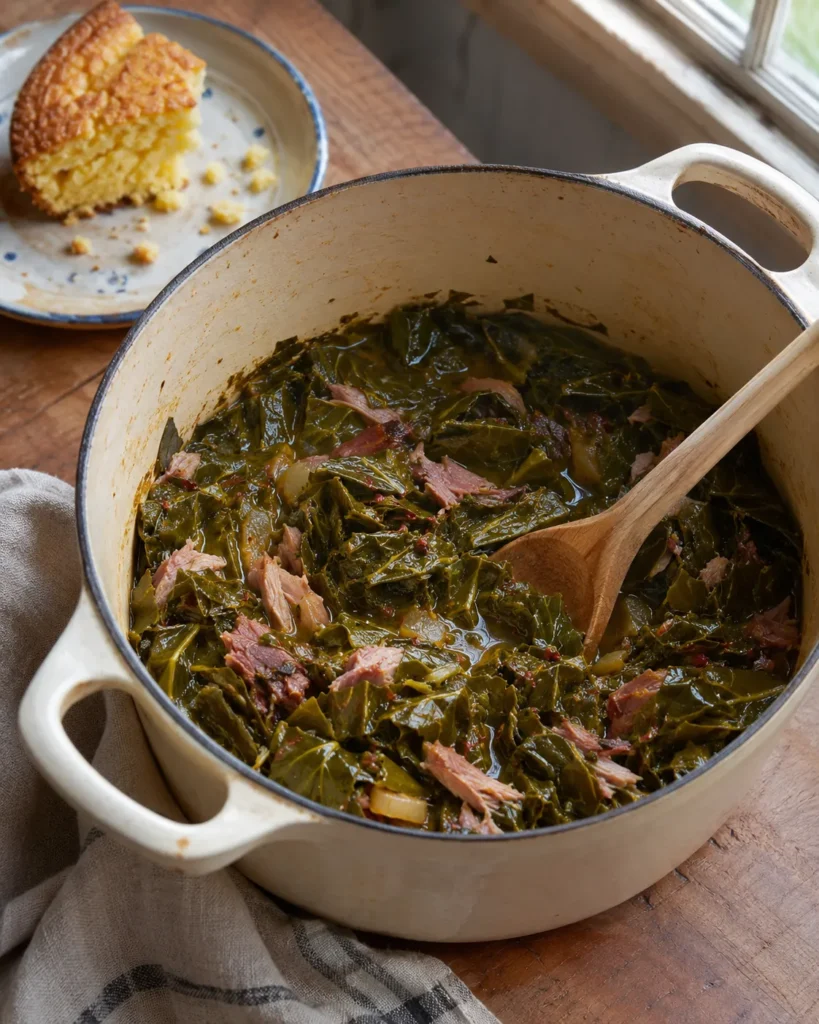
Collard greens are the star of the Southern New Year’s table. Their folded green leaves look like paper money, so eating them is said to bring wealth in the new year. Some families say the more greens you eat, the more money you’ll make.
How to make them: Wash and chop about two bunches of collard greens, removing the tough stems. In a large pot, cook a chopped onion and a few garlic cloves until soft, then add a smoked turkey leg or ham hock and enough chicken broth to cover. Add the greens, a splash of apple cider vinegar, and a pinch of red pepper flakes. Simmer, covered, for about an hour to an hour and a half, until the greens are very tender. Season with salt and pepper.
Make-Ahead Tip: Collard greens taste even better the next day, so cook them on New Year’s Eve and reheat them for lunch.
Black-Eyed Peas and Hoppin’ John for Luck
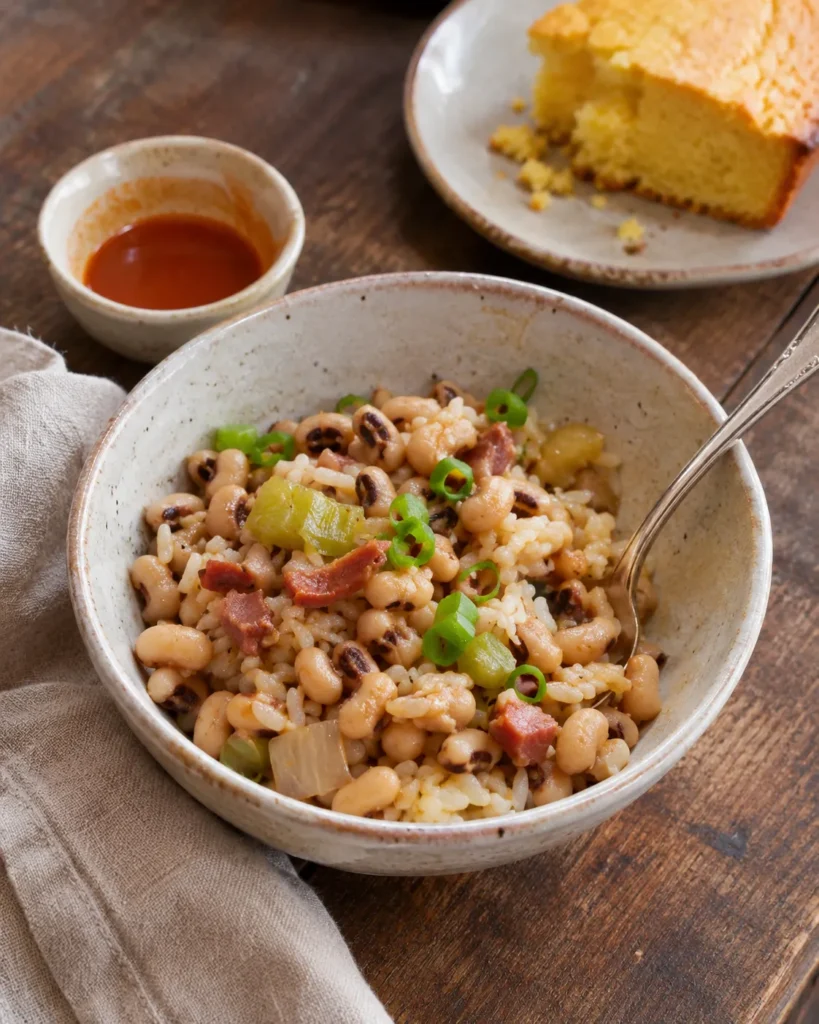
Black-eyed peas are the most famous Southern lucky food. They’re said to look like little coins and to swell as they cook, symbolizing growing prosperity. They’re often served as Hoppin’ John, a hearty dish of black-eyed peas and rice cooked with onion, celery, bell pepper, and smoked meat.
How to make it: Cook chopped bacon or smoked sausage in a pot, then add diced onion, celery, and bell pepper. Stir in cooked or canned black-eyed peas, a little broth, and a bay leaf, and simmer for about 20 minutes. Serve over rice, topped with sliced green onions and a dash of hot sauce.
Tradition Tip: Some families hide a clean coin under a bowl or in the pot. Whoever finds it is said to have the luckiest year. Leftovers eaten on January 2 are playfully called “Skippin’ Jenny,” a sign of thrift and even more good fortune.
Cornbread for Gold
Golden cornbread represents gold and is the perfect way to soak up the flavorful broth from the greens, often called “pot liquor.”
How to make it: Heat a greased cast iron skillet in a hot oven. Mix cornmeal, flour, baking powder, a little sugar, salt, eggs, buttermilk, and melted butter, then pour the batter into the hot skillet and bake until golden and crisp at the edges, about 20–25 minutes.
Serving Tip: Serve cornbread warm, straight from the skillet, with a little butter or honey.
Pork for Progress
Pork is a common New Year’s main dish because pigs root forward when they look for food, a symbol of moving ahead in the new year. A glazed ham, pork roast, or even bits of smoked pork in the greens and peas all count.
Easy Tip: A spiral-cut ham is the easiest option. Just warm it in the oven and brush on a simple glaze of brown sugar and mustard.
Lucky New Year’s Foods Around the World
Philippines: 12 Round Fruits
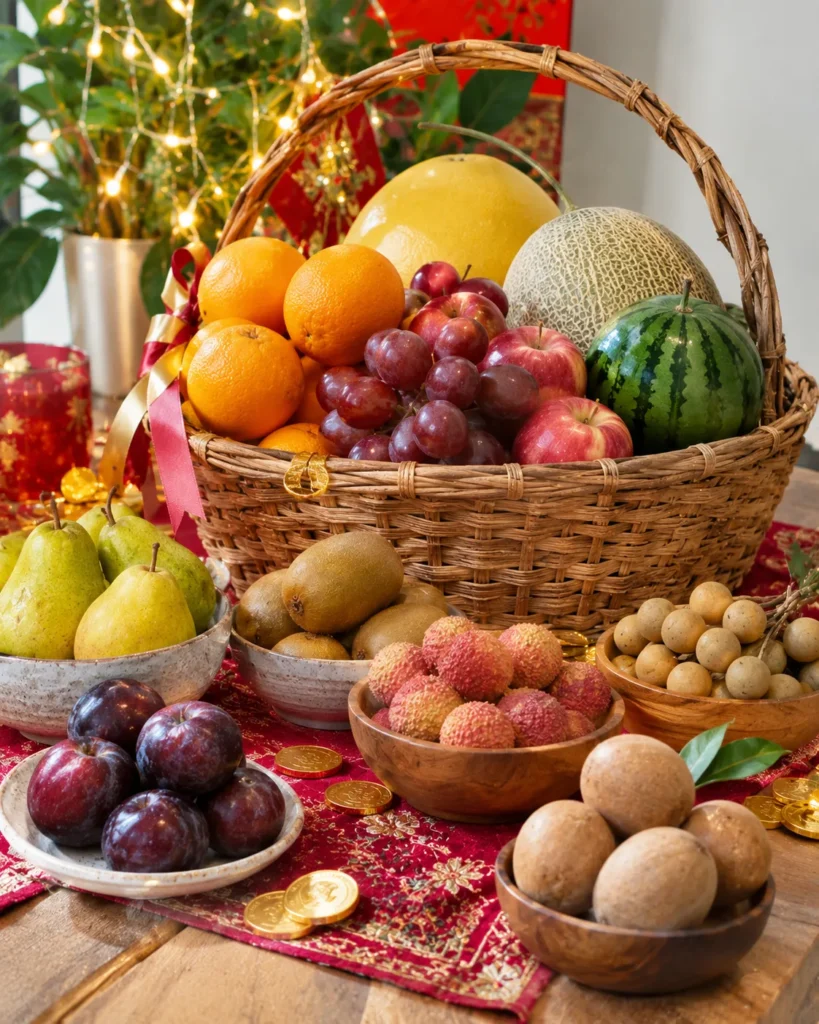
In the Philippines, families set out 12 different round fruits on the table for New Year’s Eve, one for each month of the year. Round shapes look like coins, so the fruits represent prosperity and abundance for every month ahead. Popular choices include oranges, grapes, apples, pomelo, melon, watermelon, pears, kiwi, lychee, longan, plums, and chico.
Filipino families also serve long noodles (pancit) for long life and sticky rice treats to keep the family close together. Many people wear polka dots and keep coins in their pockets at midnight for good luck.
Easy Idea: Even if you don’t celebrate this tradition, a bowl of mixed round fruits makes a colorful, healthy centerpiece for your New Year’s table.
Italy: Lentils and Cotechino
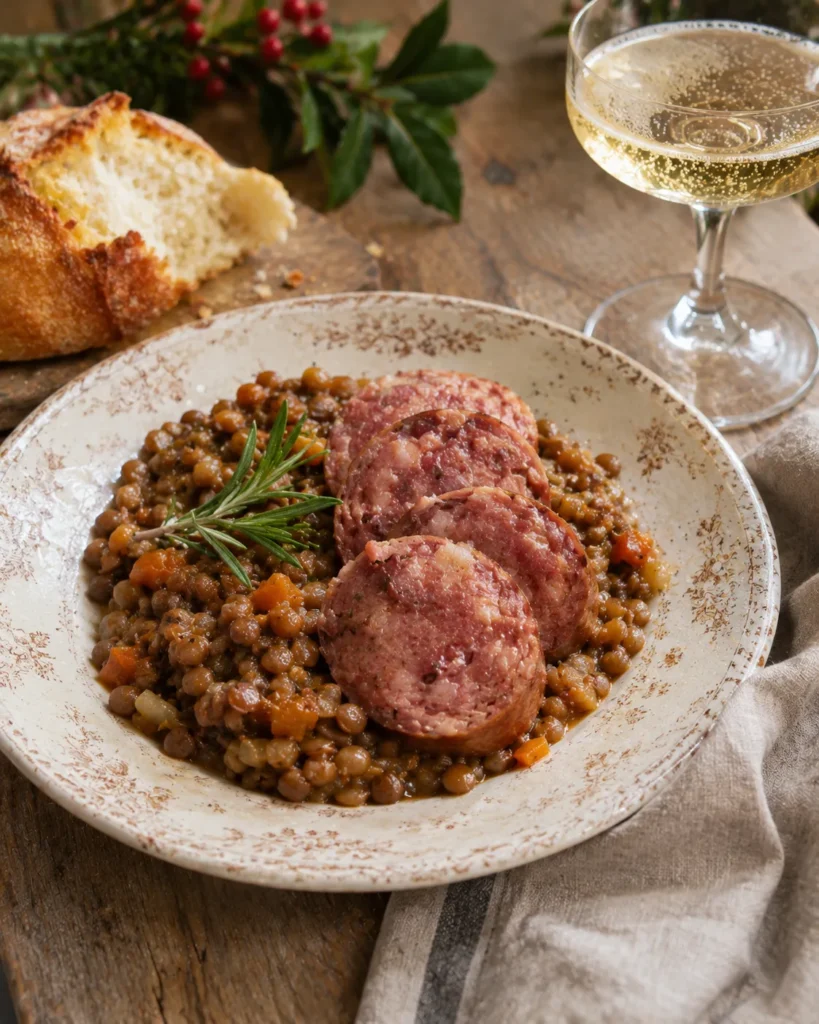
In Italy, lentils are a must on New Year’s Eve. The small round lentils look like coins, and eating them is believed to bring money in the new year. They’re traditionally served with cotechino, a rich pork sausage, or zampone, often just after midnight or as part of the big New Year’s Eve dinner.
How to make it: Cook a little onion, carrot, and celery in olive oil, add brown lentils and broth, and simmer until tender. Serve topped with slices of cooked cotechino and a sprig of rosemary.
Spain: 12 Grapes at Midnight.

In Spain, people eat 12 grapes at midnight, one with each chime of the clock. Each grape represents good luck for one month of the year. Eating them all before the last chime is harder than it sounds, which makes it a fun tradition for any New Year’s Eve party.
Party Tip: Use small seedless grapes and set out one glass of 12 grapes for each guest before midnight.
More Lucky Food Traditions
- Japan: long buckwheat soba noodles on New Year’s Eve for a long life
- Greece: vasilopita, a sweet bread with a coin baked inside. Whoever finds it has a lucky year
- Netherlands: oliebollen, sweet fried dough balls dusted with powdered sugar
- Scandinavia: rice pudding with one hidden almond. The finder gets good luck
- Many cultures: round, golden, or ring-shaped foods like cakes and bagels for prosperity and the year coming full circle
Read More:
✨ New Year’s Eve Party Food Ideas
✨ Vintage New Year’s Eve Party Ideas
✨ New Year’s Eve Party Games and Activities
An Easy Lucky New Year’s Day Menu
Want to bring a little luck to your own table? Here’s a simple menu that combines the best traditions:
- Main: glazed ham or pork roast
- Sides: collard greens, Hoppin’ John, and skillet cornbread
- Something from around the world: a bowl of 12 round fruits or a small dish of lentils
- Dessert: a round cake or golden ring-shaped treat
- Midnight extra: 12 grapes and a glass of sparkling cider
Make-Ahead Plan
- December 30: shop for ingredients and wash and chop the collard greens.
- New Year’s Eve morning: cook the collard greens and the black-eyed peas, then refrigerate.
- New Year’s Eve night: set out the 12 round fruits and the grapes for midnight.
- New Year’s Day morning: warm the ham, reheat the greens and peas, and bake the cornbread fresh.
- Lunch or early dinner: serve everything family style and share what each dish means.
Lucky Foods Shopping List
- Greens: 2 bunches of collard greens, onion, garlic, apple cider vinegar, red pepper flakes, chicken broth, smoked turkey or ham hock
- Hoppin’ John: black-eyed peas (dried or canned), rice, bacon or smoked sausage, celery, bell pepper, green onions, bay leaf
- Cornbread: cornmeal, flour, baking powder, buttermilk, eggs, butter
- Main: spiral-cut ham or pork roast, brown sugar, mustard
- Around the world: 12 different round fruits, brown lentils, cotechino or sausage, seedless grapes
Frequently Asked Questions
What are the lucky foods to eat on New Year’s Day?
In the Southern US, the classic lucky foods are collard greens for money, black-eyed peas for luck, cornbread for gold, and pork for progress. Around the world, people also eat round fruits, lentils, long noodles, and grapes for prosperity.
Why do people eat collard greens on New Year’s?
Collard greens are said to look like folded paper money, so eating them on New Year’s Day is believed to bring wealth and financial luck in the coming year.
Why do people eat black-eyed peas on New Year’s Day?
Black-eyed peas are thought to resemble coins and to swell as they cook, symbolizing prosperity. They’re a centuries-old Southern tradition, often served as Hoppin’ John.
What is Hoppin’ John?
Hoppin’ John is a Southern dish of black-eyed peas and rice cooked with onion, celery, bell pepper, and smoked meat. It’s traditionally eaten on New Year’s Day for good luck.
What are the 12 round fruits for New Year?
In the Philippines, families display 12 different round fruits on New Year’s Eve, one for each month, to invite prosperity. Common choices are oranges, grapes, apples, pomelo, melon, watermelon, pears, kiwi, lychee, longan, plums, and chico.
What foods should you avoid on New Year’s?
Some traditions say to avoid chicken (because chickens scratch backward for food) and certain fish or lobster (which can move backward), since the goal is to move forward into the new year.
Final Thoughts
Whether you grew up with a pot of collard greens on New Year’s Day, a basket of 12 round fruits, or a bowl of lentils after midnight, lucky foods are a beautiful way to start the year with hope and good company. Try one new tradition this year, share the story behind it with your family, and enjoy a delicious, meaningful start to the year ahead.
📌 Save This Guide for Later
Planning your New Year’s menu? Save this post to your New Year’s board so these lucky food traditions are ready when you need them.